This is coming in so late, but here it is nevertheless — yet another update from that fabulous New Jersey SCBWI conference. Yes, if I could, I would blog about it forever, but in fact, I only have one more post after this one to share with you.
This one was from a wonderful workshop by Carolyn Yoder, the editor of Calkins Creek Books, a U.S. history imprint of Boyds Mills Press. Even though Carolyn deals with American history, and my historical fiction is set in foreign lands, I was especially excited to meet her, as a beloved editor of my very good friend and dedicated reader of this blog, Joyce Moyer Hostetter.
Carolyn greeted us with these encouraging news: “I would like to publish more historical fiction, and that’s why I’d like to speak to you,” she said. “We don’t get a lot of it, and we don’t get a lot of it that’s good.” 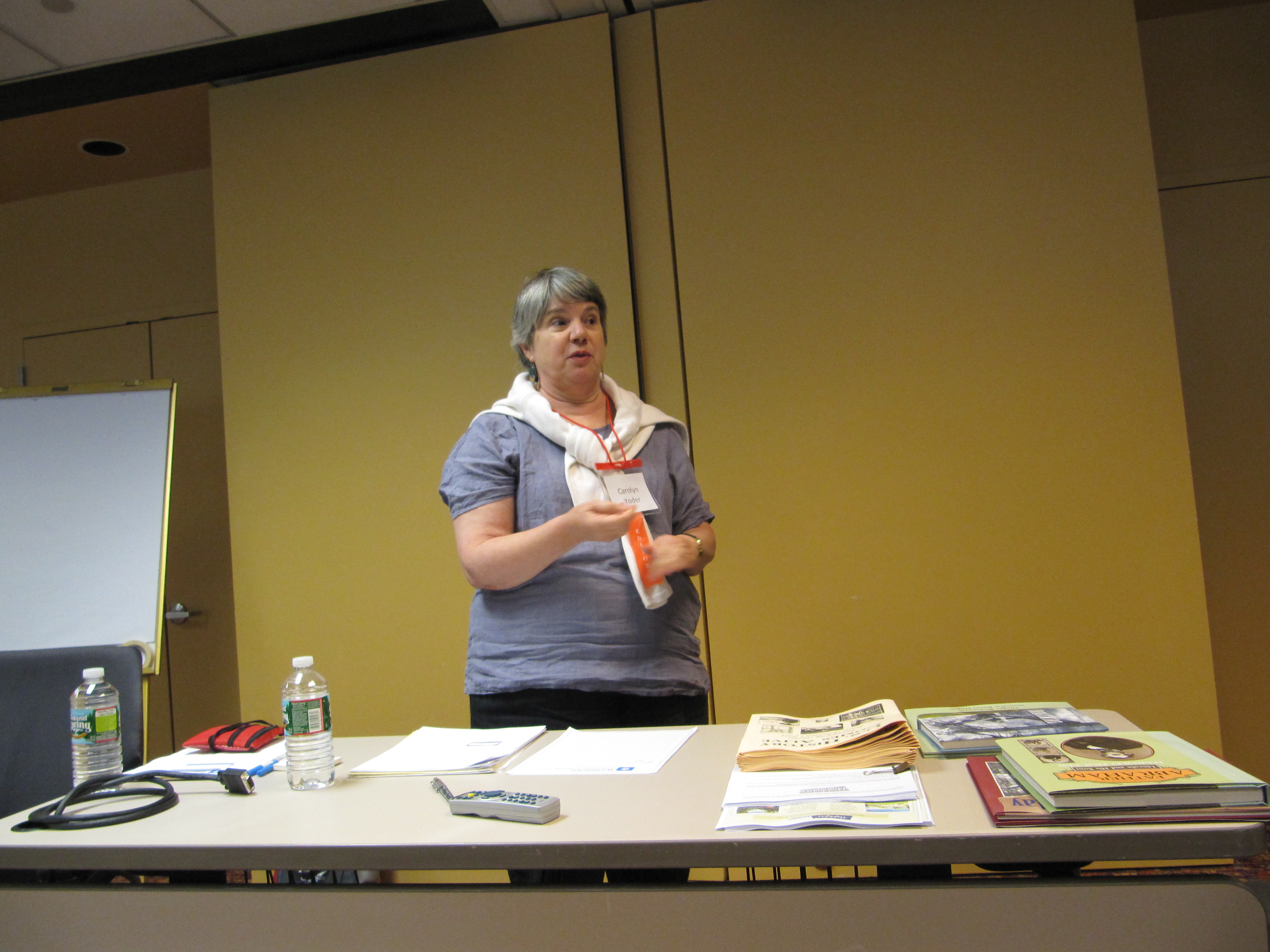
Here are some of the pointers Carolyn had to offer for aspiring historical fiction authors:
1. Fall in love with research. If you write historical fiction, take GREAT care with research. Live, breathe, sing, become your times and your subject! Get to a point where you are so comfortable with the era and the people and the places you write about, that the history will naturally shine upon the page.
2. Consider World War II. “I get no novels from World War II on, but the kids are very interested.” 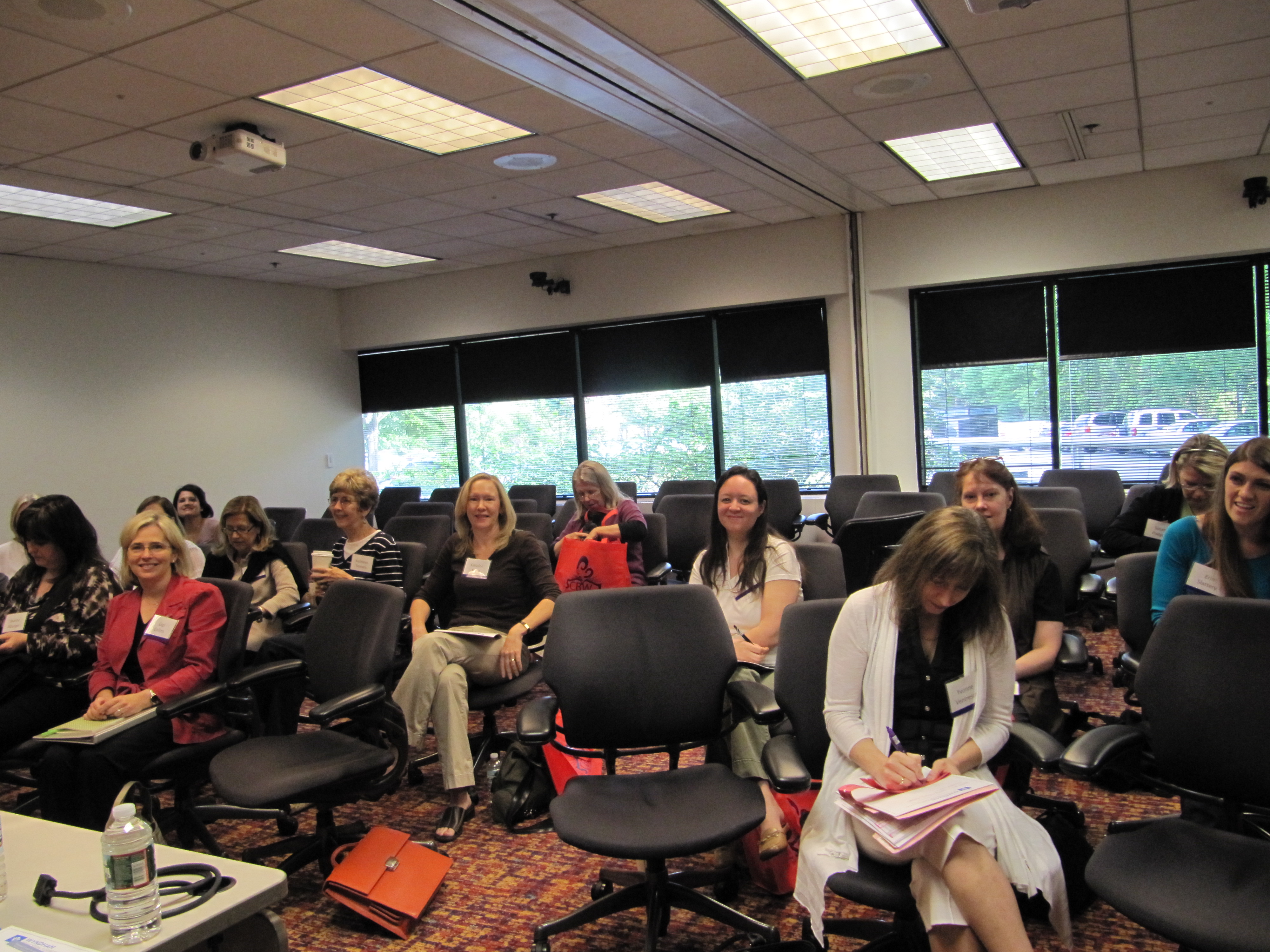
3.Think about why you write historical. What draws you to the past? Do you want to tell a story that hasn’t been told before? Is it personal to you? “A lot of people like to write historical fiction because they like to go to the library,” Carolyn said. “Those are the kinds of people I tend to like a lot. . . . My point is, why tell your story when you’re not gonna have an allegiance to the past? I want kids to truly appreciate the past, and that’s what should be your motivation.”
4. Put together a bibliography. If you submit to Carolyn, include a thorough and diverse list of sources, which should be piece of cake after all that research you have done. “Don’t think of it as a chore — there’s your story!” Some of the great sources to include are newspapers articles, obituaries, local almanacs, maps, scrapbooks, local museums, academic and museum experts and interviews with people who have lived through the time period.
5. Explore relationships and reactions. Once the research is done, recreate the past through characters that feel like “living, breathing people.” Go for details over generalizations as you make the past come alive through “relationships and reactions” of your characters. “People basically have never changed,” Carolyn said.
With these and other tips, Carolyn had a hopeful message to share. “I am here to tell you that historical fiction is alive and well. It’s been interesting that people have this fear. There is nothing further from the truth.”
One only needs to take a look at this year’s Newbery winners to see the truth in Carolyn’s words. Sure, some editors seem afraid. Stories of a Lithuanian family sent to Siberia in the 1940s get rejected by nervous publishers. Then they get picked up by others and become New York Times bestsellers. I am talking about the heart-wrenching “Between Shades of Gray” by Ruta Sepetys, published just this year.
My own 12-year-old son loves fantasy. But sometimes, he puts his beloved series away and reaches for a book like “Solider X” by Don Wulffson, about a young German soldier drafted into Hitler’s army in 1944 and forced to reconsider his loyalties — a book I plan to blog about soon.
A Harper Collins editor attending the New Jersey SCBWI graciously sent me a copy of “The Boxing Club” by Robert Sharenow, a story about a non-religious 14-year-old Jew in Nazi Germany — something I just finished and will be reviewing in the coming weeks.
So chin up, fellow historical fiction authors. No one is going to make it easy for us. Many editors, unlike Carolyn, are still cautious. But armed with passion for history — or a certain time period — and perhaps a conviction that the world needs to know more about it, write on — keep on researching! There are no guarantees, but it’s the only way for those important stories to find their way into kids’ hearts and minds, possibly creating a richer generation for it.
If you are friends with writers of historical fiction, pass this on… and oh, leave a comment here and I’ll enter your name to win a copy of “The Berlin Boxing Club!”



 Katiaesque
Leave a comment