So, how is it? What have you learned? What are you learning?
As soon as I came back from my first residency at the Vermont College of Fine Arts, Writing For Children and Young Adults MFA program, the questions started pouring in.
Once, I was once one of the eager questioners, hungry for any nuggets of wisdom from those insane/independently rich/lucky MFAs. Now I smile, because I know, what I have learned in Vermont — already, just from the one residency — is too big, too rich, too magical to fit into nuggets. What I think I have started learning, is who I am as a writer, what it means to be one at all, where I fit in as a human being. To top it off, during residency there are lectures on craft, workshops, readings, story ideas pouring into your head, occasionally deep yet totally random discussions over lunch with fellow writers.
How do you sparse that out in nifty little packages of advice?
I’ll try anyway 🙂
1. Accept your own insecurity as a writer
Hanging out with so many other talented writers, teachers and students alike, it was so easy to see: insecurity is part of our profession. I used to think there was a great big wall separating some writers from others. Published vs. unpublished, award-winners and bestsellers vs. the bright-eyed wanna-be’s. Now, having hung out with all sorts of writers during the short (but intense) residency period, I am here to tell you that really, there are no walls. No separations. We writers are all of one tribe, always looking to improve our process, always terrified to share a page from a work-in-progress. I don’t think that ever goes away. I think, in fact, if it ever does, we are no longer writers.
Are you okay with this? It can be a tough thing, living with this insecurity for the rest of your life/career. Then again, maybe we writers are simply honest about it. Which human being has ever figured it all out, be they a surgeon, a plumber or a king?
2. Be brave 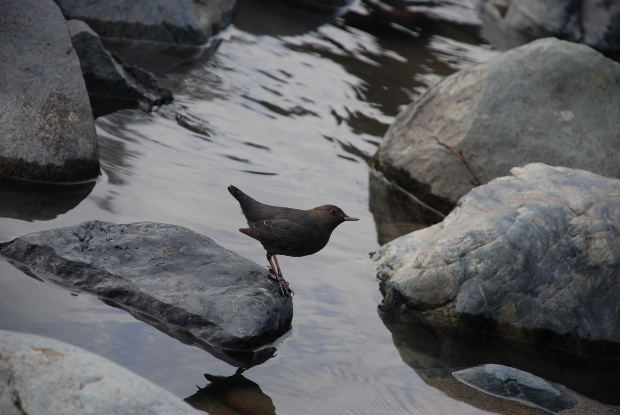
While I was on campus, there were many situations and opportunities that terrified me. Sign-ups were available for readings (sharing your work from behind a podium, in front of the microphone, before your fellow students). During a marvelous event called “storytelling slam” everyone was welcome to tell a story — whether real or fictional — in front of the audience, no notes allowed. At first I wasn’t quite sure why I made myself do it: sign up for every scary thing. Then I realized, because facing your fears is all about what we writers do.
Now I try to bring that courage to the page, every day. I remind myself that the risk to make a fool of myself, to fall flat on my face, is also a thrill, an act of honesty, a step toward freedom.
Again, this sort of applies to any human being, actually. I tell my kids this: do something every day that scares you.
3. Read your work aloud
It’s amazing how the pressure of reading your words aloud to a bunch of friends/semi-strangers can suddenly turn you into the sharpest, fiercest editor of your own work. When you’re looking over that miserable sheet of paper before your reading, and you’re lucky enough to have a few extra minutes with a pen in hand, those little darlings suddenly become oh so easy to kill. Do you have any local readings, at your library, in a coffee shop? If not, do a little reading with your writing group. Or simply read your work out loud to your family. The very least you could do is print out your work and read it aloud to yourself. Not as effective as reading it to someone else. Still, yours ears will catch what your eyes have missed. Try it!
4. Surround yourself with talented people
If you want to keep growing, it’s nice to be able to see what you’re reaching toward. At VCFA it’s easy. Attending students’ and faculty readings was one of my favorite experiences during the residency. Why? Because of the sheer talent. Listening to the graduates, teachers and my fellow students read, I felt like a plant absorbing all that sunshine.
Form critique groups and hang out with talented writers, people whose work you truly admire. Venture to great readings more often. Read amazing books. Reach!
5. Stay true
Writing here in the real world, it can be so hard to keep our work pure. It’s hard not to imagine all those people we hope will be holding our books someday. Sometimes, it’s hard not to think about how a certain creative decision might affect potential sales, hard not to steer your work toward pleasing the marketplace, your agent, your editor. But being in Vermont, I was immersed in the world of pure writing, where doing good work is on everyone’s minds, and publication and recognition are treated like, “whatever.” Oh how healthy it was for my writing soul! I was reminded that trends are fake, like those plastic gemstones on a tiara from a one-dollar store. While it’s important to consider your peers’ and professionals’ feedback, what’s more important is to trust the truth of your own writing.
So, what I’m trying to say here, I guess is, listen to suggestions. Stay open. Try things out. But in the end, hold fast to the core of who you are as a writer. Hold on to the truth of the story and the honest, authentic reasons you wrote it.
Of course, this list of five is but a small offering, a handful of little tokens. And of course I’ll be sharing more as we go along. I hope it makes sense. And I hope it helps you.


 Katiaesque
Leave a reply to teresarobeson Cancel reply